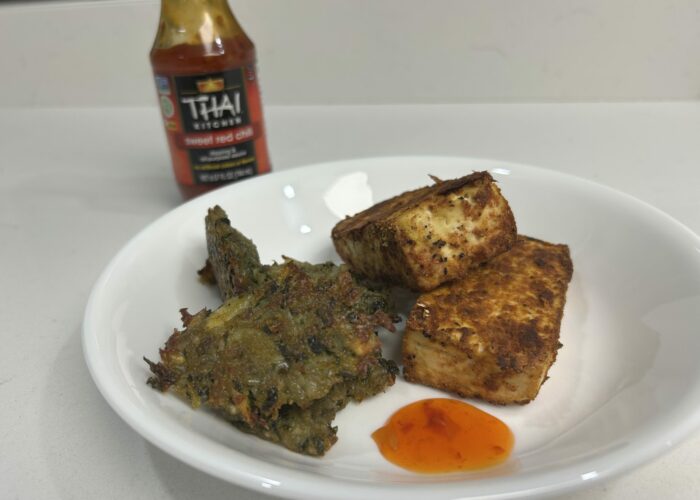
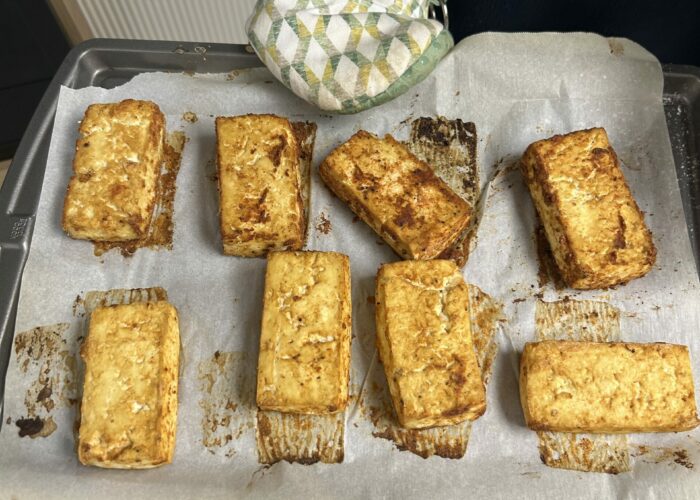
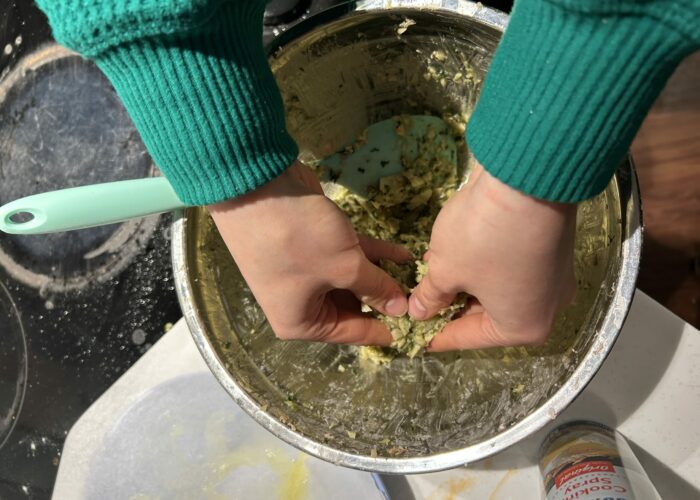
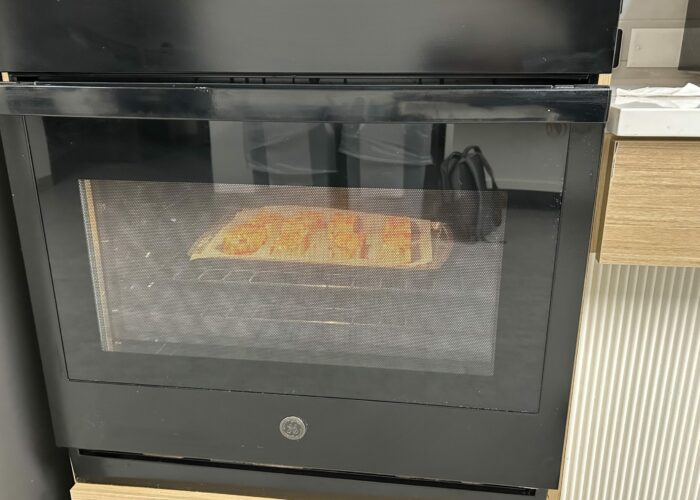
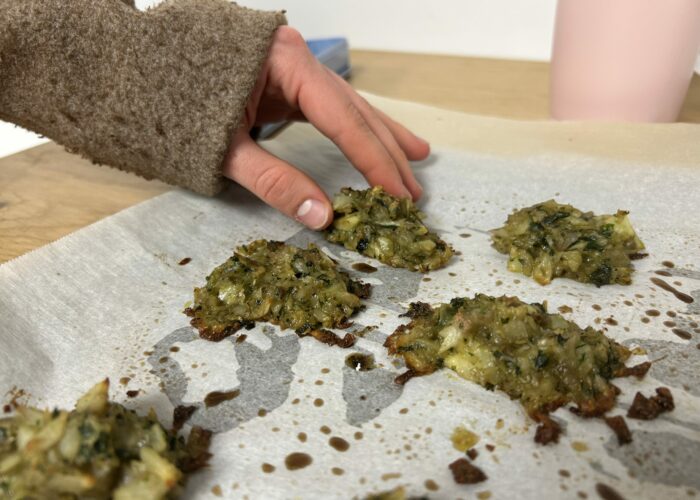
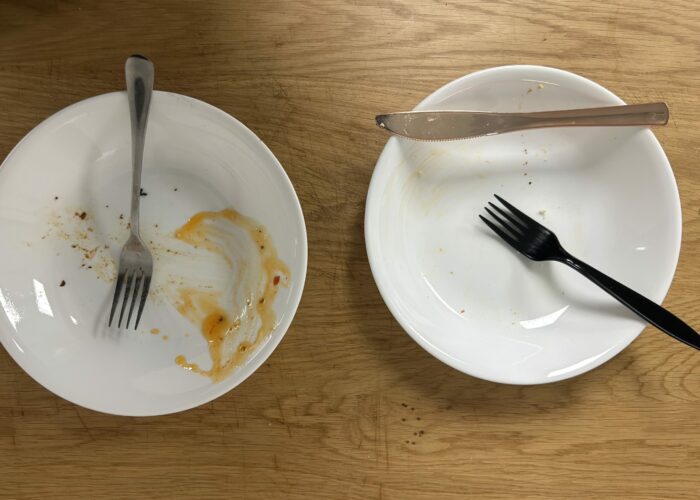
Isa Efimov and I began our collaborative “Something New” with a grocery list. We picked up ingredients and cooking utensils from Lula Bell’s and Harris Teeter. We scrounged through my dorm room and Davidson Outdoors’ kitchen shelves for the pots, baking sheets, and food processor that we needed. We finished our classwork in time to meet in Belk’s kitchen on a Sunday evening in March.
Then we cooked (a gluten-free, kosher, vegetarian version of) Marcellus Williams’ last meal.
Missouri executed Wiliams last year for the 1998 murder of journalist Felicia Gayle. Williams and his attorneys maintained his innocence throughout his case, the Gayle family requested legal forgiveness for him, and last-minute evidence cast doubt on his conviction, but those considerations made no difference: Williams received a lethal injection around 6:00 p.m. on September 24, 2025. He died approximately five months, five days, three hours and thirty-five minutes before Isa and I sat down to eat. His last meal, like our meal that night, was chicken nuggets and Tater Tots (Von Quednow and Yan).
Williams’ request was not unusual: death row inmates often request filling “comfort foods” for their final meals, from burgers to sodas to chicken tenders to ice cream (Rayner; “The Last Meals”). I know because media coverage of last meals is extensive—staggering, even, in contrast to slim primary resources about prisoners’ final moments. Most striking to me are the death row cookbooks I have encountered, which largely ignore the gravity I associate with ending a person’s life. For example, an online description of Dylan Frost’s book Last Meals – The Final Suppers of Serial Killers & Murderers begins, “It is unavoidably fascinating to see what famous killers choose as their last ever meal on planet Earth” (Frost). Jack and Ashley Smith’s Last Meals: Recipes of the Condemned promises a “chilling journey through the last meal requests of Death Row condemned, recipes included!” (Smith and Smith). Why, I wondered as I conducted research for this project, do these books employ such flippant language? Even more importantly, could Isa and I avoid their disturbingly cheery attitude through our actions, honoring and humanizing Williams instead?
I forgot all these questions as we began our meal. It was close to ten o’clock at night, I had hardly eaten all day, and all I could focus on were the warm, filling calories I was shoveling in my mouth. As we cleaned the kitchen afterwards, though, I began to wonder whether our project had succeeded. Our meal was delicious, but I had hoped that it would do more than nourish us: by engaging in a concrete action that called attention to William’s death, I sought to offer a counterpoint to the flippant language I encountered in death row literature. Was the shift from the cookbooks’ words to our actions enough to work a change in meaning? Was my intended solemnity undercut by my enjoyment of the cooking process and homemade food? If I thought about my own body’s needs rather than Williams’ during the meal, did the project even count?
The next night, though, as I reheated my leftovers for another meal, I could not stop my mind from returning to Williams. With each turn of the microwave and then with each bite I took, I found myself thinking, he didn’t get leftovers. He didn’t get leftovers. He didn’t get leftovers.
I am still not certain whether Isa and I succeeded in our original project goals. However, by the time I had eaten the last of my leftovers, I had unwittingly accomplished something different, something more personal: I had brought my own attention to Marcellus Williams, a single, human person murdered by the state. Putting myself in a situation with a resonance—however distant—to his final moments made him and his situation impossible for me to forget.
Recipes
Works Cited
Frost, Dylan. Last Meals – The Final Suppers of Serial Killers & Murderers. Self-published, September 2022. Thriftbooks, www.thriftbooks.com/w/last-meals—the-final-suppers-of-serial-killers–murderers/37564708.
Von Quednow, Cindy, and Holly Yan. “Missouri Executes Marcellus Williams Despite Prosecutors and the Victim’s Family Asking That He be Spared.” CNN, 25 September 2024, www.cnn.com/2024/09/24/us/marcellus-williams-scheduled-execution-
date/index.html.
Rayner, Jay. “Last Meals on Death Row, a Peculiarly American Fascination.” The New York Times, 10 March 2020, www.nytimes.com/2020/03/10/dining/death-row-last-meals-jay-rayner.html.
Smith, Jack, and Ashley Smith. Last Meals: Recipes of the Condemned. Independently published, 17 April 2023. Amazon, https://www.amazon.com/Last-Meals-Condemned-
Jack-Smith/dp/B0C2RYNC2V#detailBullets_feature_div.
“The Last Meals of US Prisoners on Death Row.” BBC, 16 August 2020, www.bbc.com/news/in-pictures-53758533.
